Owner's
Manual
Safety, power supply, handling and specifications for the mod.mechanics foldable eurorack case.
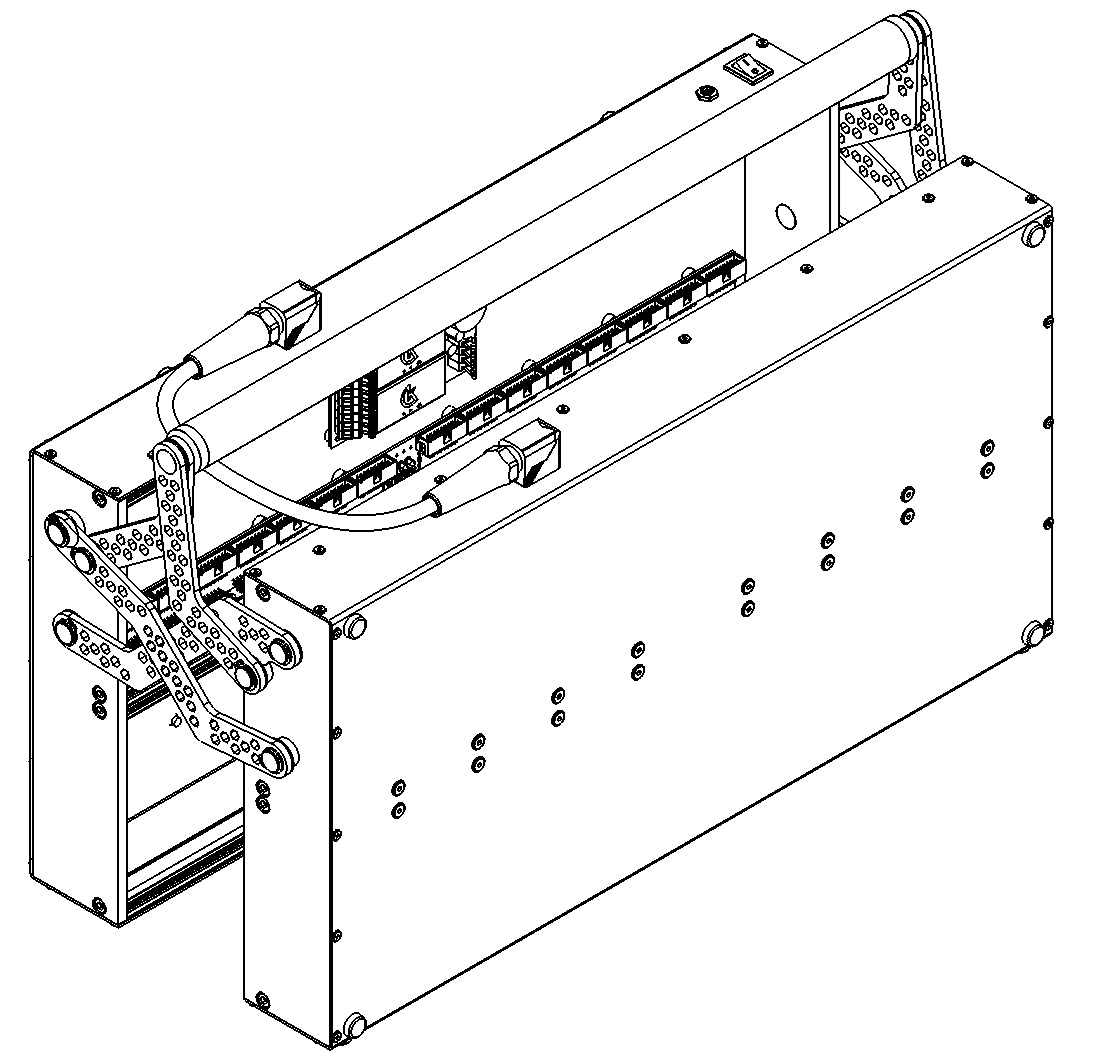
About the case
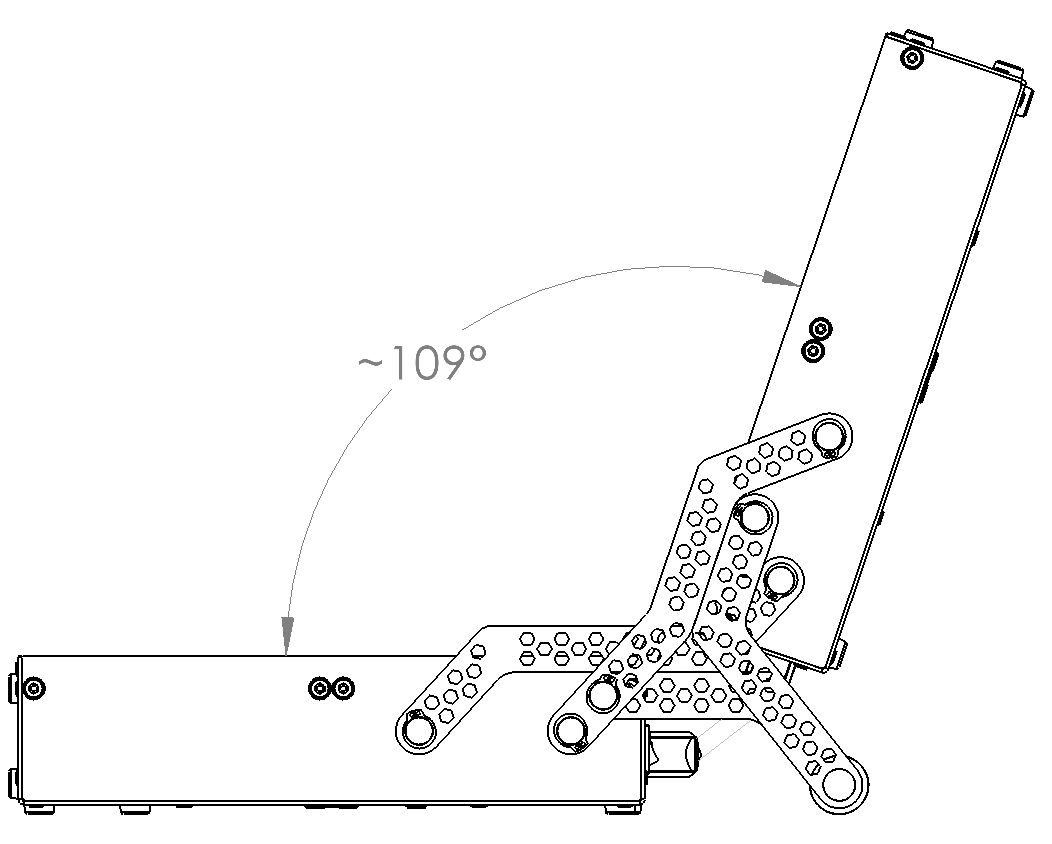
The mod.mechanics case is a fully metal, foldable eurorack enclosure. It folds flat for transport and unfolds on a scissor linkage into a rigid, angled playing position.
- Construction: aluminum sheet, stainless steel hardware, aluminum rail extrusions.
- Folding: scissor linkage with carry handle; no loose parts, no assembly required.
- Configuration: each case is built to order — height (U), width (HP), finish, rails, power supply. Applicable figures: Section 5 and your order sheet.
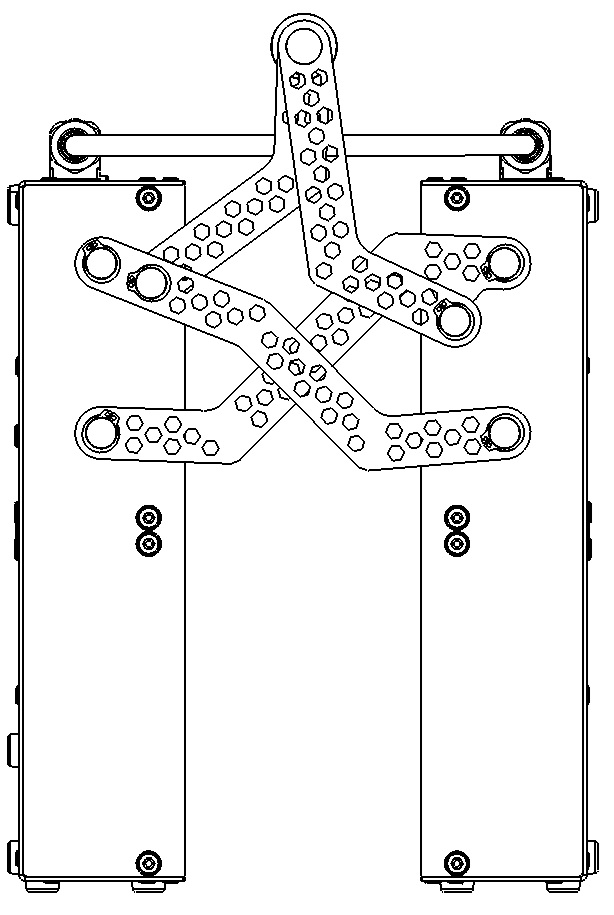
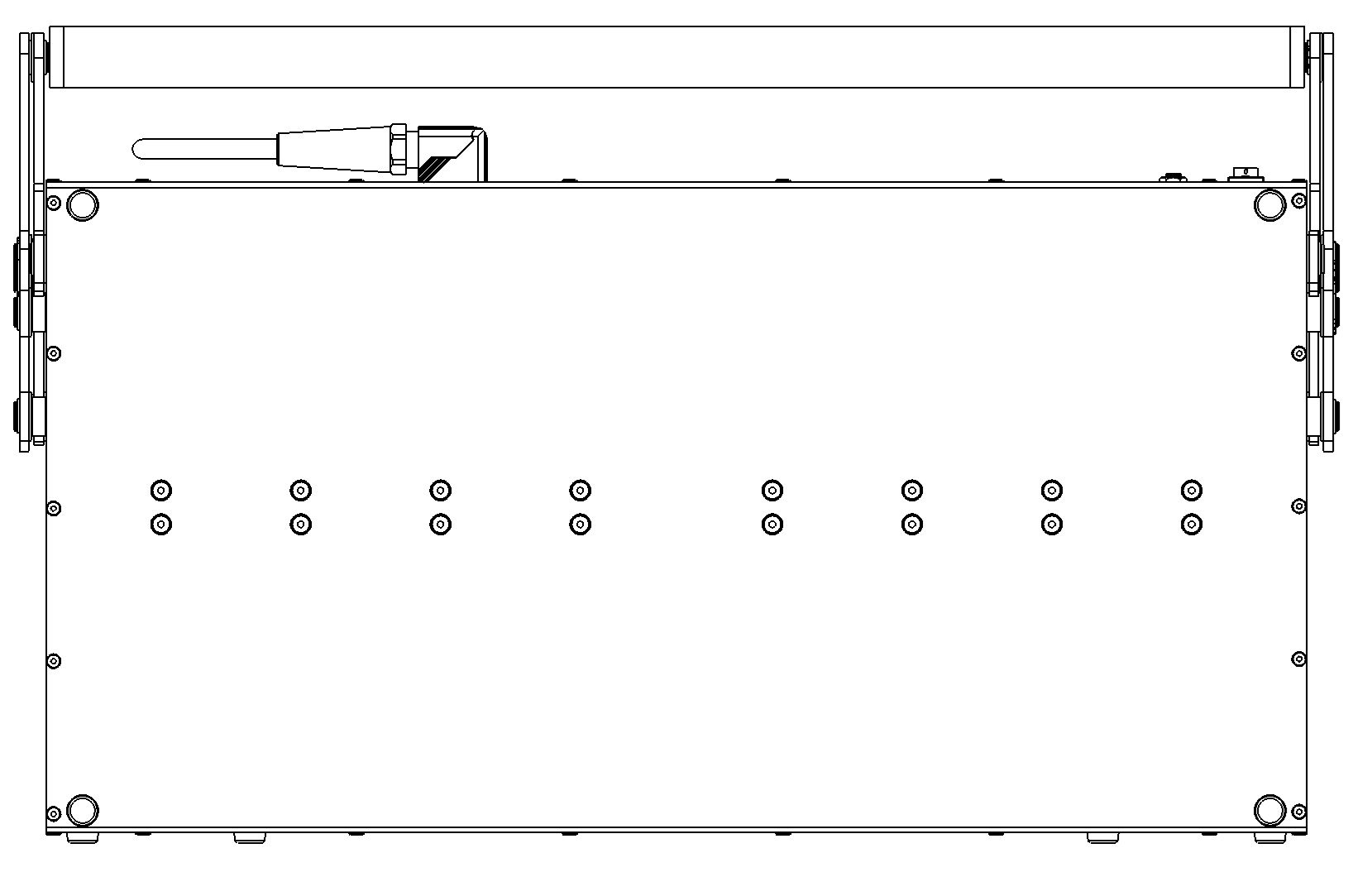
Cases are built by hand in small series. Minor tool marks and surface variation are inherent to the process and are not defects. The Raw finish ships as untreated aluminum and will mark with use. On anodized parts, slight tonal variation and small rack-contact marks may occur — the fixture points that carry the process current cannot be anodized over. At unit scale this is inherent to the electrochemical process; the effect is cosmetic and does not affect the coating's protective function.
Safety
The case carries mains-powered electronics and folds on a metal linkage.
Electrical
The power supply connects to mains electricity. Do not open the PSU or power brick. Do not operate with a damaged cable or housing. Keep away from liquids. If any part of the supply is damaged, stop using it.
- Power down and disconnect from the mains before installing or removing modules, and before folding the case.
- Make or break power connections only with the system switched off.
- Do not exceed the power supply's rated current on any rail.
Mechanical
- Pinch hazard — keep hands clear of the hinge line and linkage when folding or unfolding. Keep children away during this operation.
- Edges of hand-worked aluminum can be sharp.
- Lift and carry by the handle or case body only — never by modules or rails.
Power supply
Factory-fitted PSU, documentation and connection rules.
Unless specified otherwise at order, the case is supplied with a Konstant Lab HammerPWR 100 W eurorack power supply, factory-fitted and wired to the busboards.
| PSU (default) | Konstant Lab HammerPWR, 100 W — product page |
| PSU manual | Konstant Lab HammerPWR manual (PDF) — ratings, operating and safety data |
| PSU (custom option) | Case machined to the customer-specified mounting pattern, or conversion brackets provided. Refer to the documentation of the fitted supply. |
| Busboards (option) | mod.mechanics busboards, ordered like the PSU — 2× 24-port (< 86 HP), 2× 28-port (< 96 HP) or 2× 32-port (≥ 96 HP), 90° headers |
| Busboards (custom option) | Case machined to the customer-specified mounting pattern, or conversion brackets provided. |
| No-PSU orders | The case ships with the cables and angled feed-throughs required to route power between the two halves. Installation instructions are supplied as an appendix with such orders. |
Connection rules
- Connect and disconnect ribbon cables only with the system powered off and unplugged.
- Ribbon orientation: red stripe = −12 V. Match the −12 V marking on the busboard and on the module. A reversed ribbon can destroy a module at power-on.
- Keep the sum of module current draws within the PSU rating on each rail (+12 V / −12 V / +5 V).
Handling & maintenance
Care rules and the single maintenance point.
The case requires no scheduled maintenance. No lubrication, adjustment or part replacement is foreseen under normal use. Single exception: black-finished steel hardware on black versions — see below.
Handling rules
- Do not drop the case or subject it to impact.
- Things laid on the case will not hurt it — that is not something to worry about. We do ask, though, that the limits of the load that can be laid on the top are not explored. Sitting and standing on a case fall outside anything the structure was dimensioned for; we have tested both, and they were non-destructive only because the structure carries the usual engineering margin, not because it was designed for such loads.
- Move the case by lifting it, not by sliding it across a surface — dragging can tear out the rubber feet.
- Do not force the fold. If the case resists closing, an obstruction is in the way (cable, knob, module) — remove it and close again.
- Before folding, mind stacked (stackable) patch cables: a stack that is too tall will be snapped off by the closing case — its weight means you will not feel the resistance. Unstack or unplug them first.
- Store dry, indoors. Do not store wet.
Carry handle
- The handle grip may twist slightly about its axis. This is normal — it cannot unscrew; rotation always stops after a quarter to half a turn at most.
Cleaning
- Wipe with a soft, dry or slightly damp cloth.
- Grease marks come off well with isopropyl alcohol (IPA).
- Do not use aggressive solvents (e.g. acetone) or abrasives on painted or anodized surfaces.
- Never clean with power connected.
Black hardware (black versions)
- Black versions use some carbon-steel fasteners. In elevated humidity, wipe them occasionally with a lightly oiled cloth — light machine oil (e.g. sewing-machine oil) or a corrosion-protection oil (WD-40 type).
- If a light rust bloom appears: apply a small amount of the same oil to the fastener head only with a fine brush, leave it to work for a day, then wipe clean. Repeat if needed.
- Never rub fasteners with abrasives (paper, steel wool, pads) — this will damage the surrounding finish.
Rubber feet
- Dragging the case across a surface can tear a foot out. Four spare feet are included with the case — if one is lost, fit a spare.
- A torn-out rubber foot can be refitted from the outside: wet it with a little soapy water, then press and twist it into its hole at the same time until the flange seats.
- With access to the inside it is easier and needs no lubricant: push the foot in from the outside while pulling it from the inside until part of the flange edge catches, then work the caught edge around the full circumference — like seating a tire bead on a rim.
Disassembly & modifications
Before disassembling anything in the case — in particular the M3 case screws or the folding linkage — for any purpose (e.g. swapping M3 nuts for threaded strips), contact info@modmechanics.com first. We will explain how to do it without risk of damage.
The M3 case screws shear off very easily — tighten with particular care and low torque. A sheared screw usually means scrapping the entire side panel.
Specifications
Dimensions are parametric in width (HP) and height (U). Custom builds: see your order sheet.
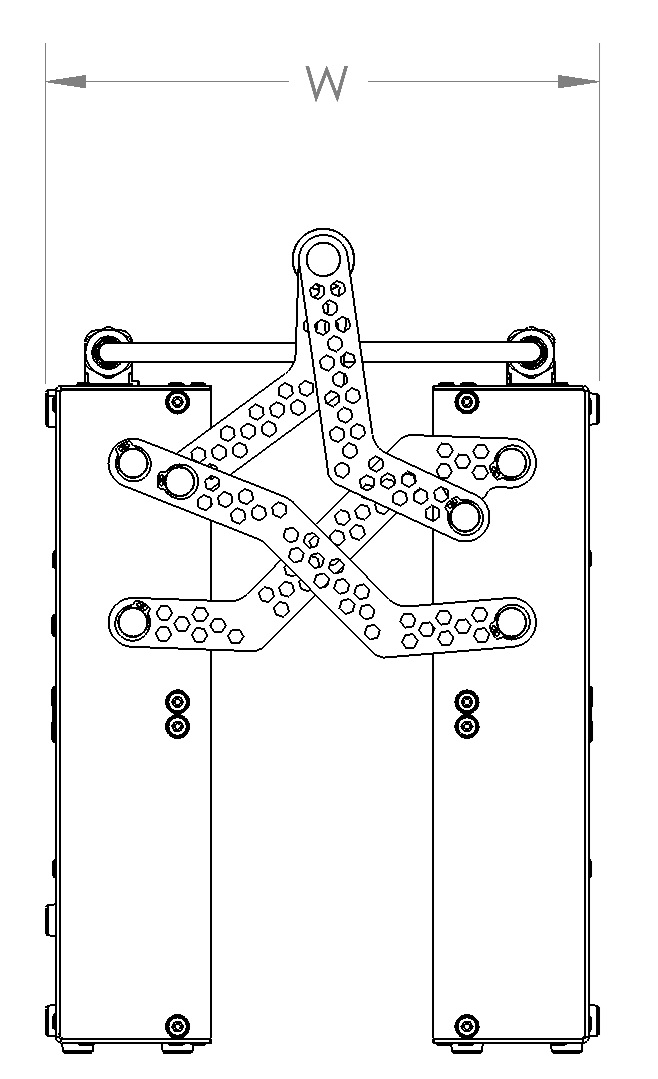
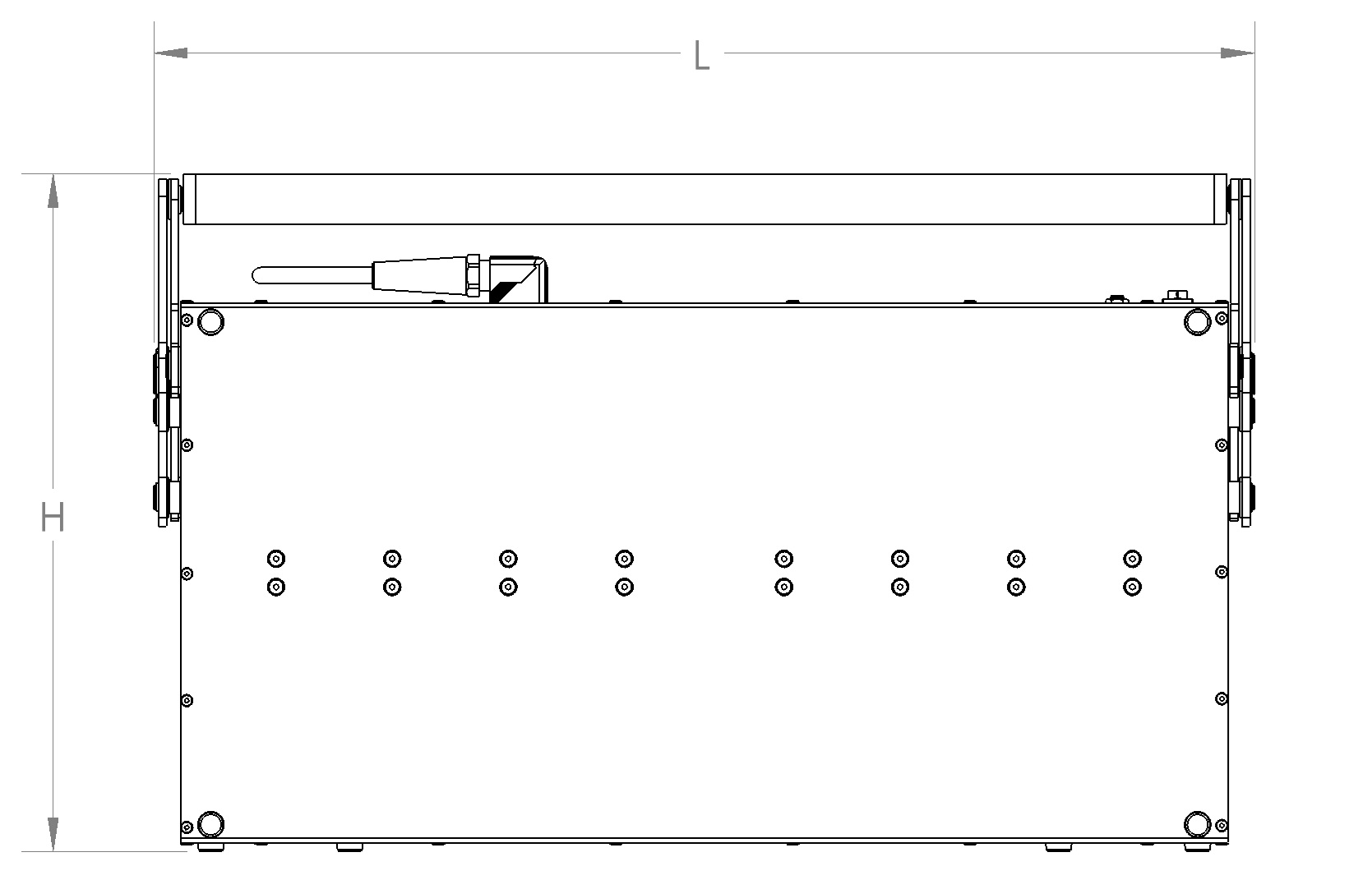
Overall dimensions (folded)
| Symbol | Dimension | Value |
|---|---|---|
| L | Length (width) | HP × 5.08 mm + 37 mm |
| H | Height | 12U: 337 mm · 14U: 381 mm |
| W | Depth, folded | 226 mm |
| α | Opening angle | ≈ 109° |
| Width option | L |
|---|---|
| 86 HP | ≈ 474 mm |
| 100 HP | ≈ 545 mm |
| 114 HP | ≈ 616 mm |
General data
| Materials | Aluminum sheet + stainless steel |
| Weight (typical) | ≈ 5–7.5 kg, by size & options* |
| Power supply | Konstant Lab HammerPWR 100 W (default) or custom — Section 3 |
| Busboards (option) | 2× (24-port < 86 HP / 28-port < 96 HP / 32-port ≥ 96 HP), 90° headers — Section 3 |
| Max module depth | 59 mm — busboard zone: see below |
| Cabin carry-on | Fits up to 100 HP folded (confirm limits with the airline) |
*Excludes travel bag and PSU power brick. 1 HP = 5.08 mm; standard eurorack modules are 3U high.
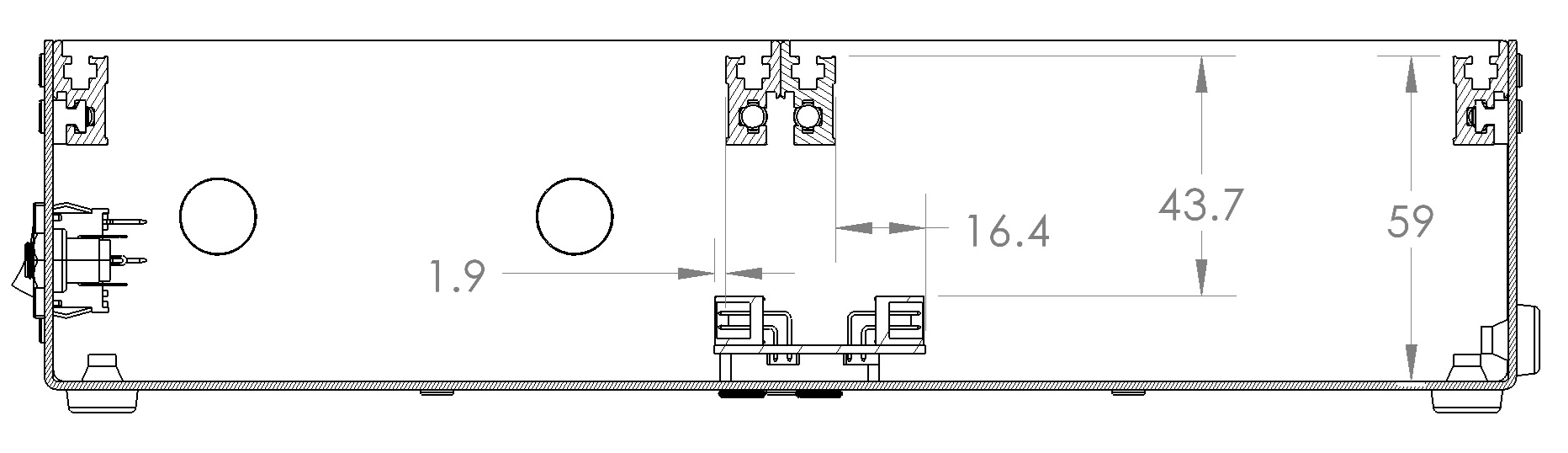
Module clearance & busboard position (12U)
Maximum module depth is 59 mm; over the busboard it is locally smaller. In 12U configurations the busboard mounts in the offset position (Fig. 4): one row keeps the full 59 mm depth over its entire height, while the board extends 16.4 mm into the other row (43.7 mm clearance over the board).
Deep modules are therefore not a constraint: place them in the cleared row — the busboard sits on the side of the row that carries shallower modules.
In the upper half of the case the busboard can be offset toward either the lower or the upper row. The direction is chosen at order and factory-fitted.
Warranty & support
Warranty terms and contact.
| Scope | Term |
|---|---|
| Electronic components (power supply, busboards, wiring) | 2 years |
| Mechanical components (chassis, folding linkage, rails, hardware) | 5 years |
| Technical support — diagnosis and problem resolution | Lifetime |
The warranty covers manufacturing defects from the date of delivery. Surface character described in Section 1 is not a defect. Third-party components (e.g. the Konstant Lab PSU) additionally carry their manufacturers' own warranties.
Lifetime technical support: for as long as the case is in use, we assist in diagnosing and resolving any issue — regardless of warranty status.
Contact
| info@modmechanics.com | |
| Web | modmechanics.com |
| Have ready | Case size (U × HP), finish, order date/number, photo of the issue. |
© 2026 mod.mechanics · Foldable Eurorack Cases · Designed & hand-built in Poland. This manual describes a configurable product; not every option applies to every case. Your order sheet governs. Owner's Manual Rev 1.0.